Ghosts in stories tend to represent a single person - a child who died young or was killed, whose presence continues to haunt her family, the victims of a serial killer who haunt a house, a woman killed on a highway who scares passing drivers. For me, a non-believer in ghosts, I see these as... Continue Reading →
Writing for liberation exercise: word portrait
Ask a friend, or someone you know who feels comfortable with you- ideally a person feeling pain or suffering in some way - if you can word-draw them. The idea is that they sit in front of you, quietly, and you can observe them. Instead of drawing, you'll write down words. Maybe you'll notice the... Continue Reading →
Writing for liberation exercise: Madlib poem
The purpose of this exercise is to have some fun, play with those creative juices, and get them flowing for ideas to come. We're going to use someone else's poem though, so the product coming out of this obviously can't be used elsewhere: but in the process of doing this exercise or afterwards, who knows... Continue Reading →
Writing for liberation exercise: play like a child
Last week in class, I watched my tiny kids turn pillows into castles, physically eat and swallow a "pizza" we made out of much spilt glue and coloured-in vegetables, and act out the animals of the masks they wore. I wish I had that amount of imagination, that much freedom in my mind to think... Continue Reading →
Writing for liberation exercise: “Preaching” politics
Some journalists, writers, and fiction authors would argue that when we have a social justice message we should communicate it subtly through situation, rather than stating the message outright. Many argue that this method respects the reader more - they'll understand. On the other hand, respect can also be just saying what you mean, clearly,... Continue Reading →
Writing exercise: Go crazy
The students I work with struggle to let go sometimes: I have to find tools, techniques and activities which seemingly give them permission to be creative. At the ages of 12-15, they have been excessively trained in the so-called rules of writing, drawing, and maths: to do the task as the teacher asks, because the... Continue Reading →
Writing for liberation exercise: Who are you as a writer?
Our role as writers, and the way we write varies with the social and economic times that we find ourselves in, and with who we are. That is, our writing reflects and rebels against the current inequalities, the current discourse, and our own economic oppression. It can take up the current struggles, and it speaks... Continue Reading →
Writing for liberation exercise: news writing prompts
Here are some writing prompts for a story, poem, vignette, spoken word... taken from the current news. Rebel! Imagine! What would that be like? What could happen instead?Or what's the worst or best that can happen? A French police officer accidentally fired a gun during the president's speech. Then.. A woman who kept a £20... Continue Reading →
Writing for liberation exercise: Monsters
Horror films are often allegories for what we most fear - and what we most fear is often political (nuclear wars, war and violence, disappearances, sexual violence, or even just not being heard or listened to). In this exercise, we're going to use similar sorts of metaphors to look at issues (personal or political... Continue Reading →
Writing for liberation exercise: opposites
Often talking about or thinking about opposites has a similar psychological effect to telling people not to think about something (they won't be able to help thinking about it). Here, I am suggesting you create (ie describe) a character that is the exact opposite of you-with all your complexity of faults, strengths, and strange habits.... Continue Reading →
Writing for liberation exercise: lose cliches
Not only do cliches tend to reinforce the status quo and stereotypes, they are also pretty boring. Here is an exercise to practice doing without: 1) Chose a any word... eg love, old, sky.. 2) For the word, list the 6 most obvious associated words. Eg Love: romance, heart, couple, kiss, date .. Old: wrinkles,... Continue Reading →
Writing for liberation exercise: venting anger
Sometimes some people mishandle their anger, but the feeling itself is legit. Though global injustice is wretched and ongoing, today many people are feeling an impotent anger and a lot of dread that is leaving them with low energy and struggling to think clearly. Here is an exercise to vent that anger, and perhaps even... Continue Reading →
Writing for liberation exercise: rebellious writing prompts
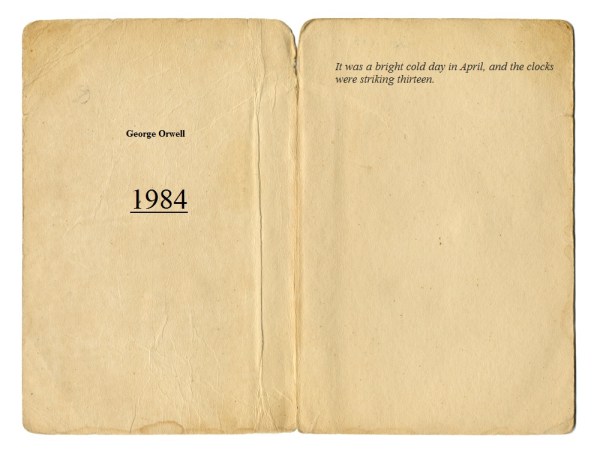
Here are some beautiful first lines from some rebellious novels and stories, that you could use to try to write your own story. (Toni Morrison)They shoot the white girl first. (George Orwell)It was a bright cold day in April, and the clocks were striking thirteen (Alice Walker) You better not never tell nobody but God.... Continue Reading →
Writing for liberation exercise: understanding creativity
What is creativity? Let's do this exercise, then talk about it. Write a list of ten uses for a toothpick. Then, if you are working on a poem, article, story or even a drawing, write a list of ten alternate ways you could have done it, or ten alternate endings, or beginnings - whatever alternative... Continue Reading →
Writing for liberation exercise: story interaction
Novels always contain stories within their stories, and life works similarly. I believe that each person is a story, and that we interact and come together and collectively we create bigger, all encompassing stories. Understanding interconnectedness and understanding that no one's suffering or victories exist in a vacuum can be liberating. Choose one of the... Continue Reading →
Writing for liberation exercise: brevity
Having limited space or words can help us focus only on the most important things. When we say what we need to say in the most concise way possible, that writing often has more force. Its brevity leaves space for thought, in a way that long rants often don't do (at least as well). Brainstorm... Continue Reading →
Writing for liberation exercise: Failure
Fear of failure is one of the biggest obstacles to creativity, and to many worthy things such as standing up for oneself or for a cause. Yet making mistakes is part of the creative process: we usually need to get through about five bad ideas before our mind is open enough to a good, more... Continue Reading →